

At 56 years old, NYU Stern School Professor Scott Galloway has become one of the most sought after brand and marketing experts in the world. One of the factors he attributes to his success: exercise. I have been working with Scott one-on-one at his home for the last year and he trains smart, hard, and for roughly 45 minutes per day four days a week. He was kind enough to sit down and talk with me for a few minutes about what exercise means to his success, the types of workouts he performs, how a newbie can get started, and the benefits of exercise outside of looking better. If you are interested in personal training, individualized training programs, or nutrition coaching that has gotten Scott unbelievable results, I am here to help.
What Do You Know About Fat?

There is continued confusion around dietary fat, and for good reason. As we continue to research and learn (while debunking old science), hypotheses around fat are misconstrued and improperly used to fuel individual agendas. The old adage, “Fat Makes You Fat,” is only part of the story and has been debunked time and time again. There is just more to the story of fat than that. However, we do know that fats are essential to our health. Let’s do a deep dive into dietary fat and how all fats aren’t created equal.
There are three major types of fat: saturated, monounsaturated, and polyunsaturated (for the purposes of this article I will not speak about trans fats as they are shown to have deleterious affects to health and are prohibited by the Academy of Nutrition and Dietetics). The differences between fats have to do with their chemical structure, but you don’t have to understand that part to know what to eat (if you want to get into it, there’s an explanation in the Guide). Here’s the short version:
Saturated fat: These fats are most often solid at room temperature. Foods like butter, palm and coconut oils, cheese, and red meat have high amounts of saturated fat. The jury is still out on whether or not saturated fats have a net positive or net negative affect on the body. I am in the camp of a net neutral.
Monounsaturated fat: It is one of the healthy fats, along with polyunsaturated fat. Monounsaturated fats are liquid at room temperature, but start to harden when chilled.
Polyunsaturated fat: include omega-3 and omega-6 fats. These are essential fatty acids that the body needs for brain function and cell growth. Our bodies do not make essential fatty acids, so you can only get them from food.
Here is a brief list of what foods you can find each fat in:

Now that we have a little more information on fat, how about some recommendations? The amount and types of fat you should be taking in vary from person to person. However, as a general rule, you should be taking in mostly polyunsaturated fats in the form of Omega-3s (not omega-6s), some saturated, and some monounsaturated fats. Minimum fat intake would be 0.3g per pound each day to maintain healthy hormone balance and bodily functions (170lb. person would be taking in 51g/day). However, for most people they will be eating more than the minimum to have a more balanced diet. For individuals looking for changes in body composition, fat is usually the macronutrient manipulated as it will not interfere with blood sugar balance. There is a lot more to unpack here, but this is a good start to educating (and re-educating) yourself about fat!
Looking to get summer body ready? I’m here to help! Click the link below to set up a free assessment today!
Can Exercise Improve Your Mental Health?

There are amazing second order effects that exercise offers. Here are 5 that improve your quality of life:
Help for depression and anxiety
If you want to improve mood and decrease both depression and anxiety, exercise is for you! Exercise releases endorphins that produce feelings of happiness and euphoria. You don’t even need to exercise like crazy. Even moderate exercise throughout the week improves depression and anxiety. Before turning to medication, consider an exercise regime first!Decreased stress
Another enormous benefit of exercise is a reduction in stress, which leads to happiness. Increasing your heart rate can actually reverse stress-induced brain damage by stimulating the production of neurohormones like norepinephrine, which not only improve cognition and mood but improve thinking clouded by stressful events. Exercise also forces the body’s central and sympathetic nervous systems to communicate with one another, improving the body’s overall ability to respond to stress.Increased self-esteem and self-confidence
Hitting personal records, training on consecutive days, and seeing your body change can lead to major boots in your self confidence. You may not set out to look better, run farther, or lift heavier, but it often happens without you knowing it.Better sleep
There are many supplements and sleep aids that can be useful getting better sleep. For a person who is sedentary, there is no better sleep aid than exercise. Physical activity increases body temperature, which can have calming effects on the mind, leading to less sheep counting and more shuteye. Exercise also helps regulate your circadian rhythm, our bodies’ built-in alarm clock that controls when we feel tired and when we feel alert.Brain boost
Exercise can also boost brain power in many ways. Studies on mice and humans indicate that cardiovascular exercise creates new brain cells—a process called neurogenesis—and improve overall brain performance. It also prevents cognitive decline and memory loss by strengthening the hippocampus, the part of the brain responsible for memory and learning. Studies also prove that physical activity boosts creativity and mental energy. I can’t tell you how many times I have come up with great and creative ideas after exercise!
If these benefits have you motivated to get started, I’m here to help! Click the link below to get started.
Could the Bedjet Help Your Sleep better?
I have talked about the importance of sleep many times before, but here are a few facts I came across the other day:
Adults between 18 and 64 need seven to nine hours of sleep per night. Adults over 65 need 7-8 hours.
35.2% of all adults in the U.S.7 report sleeping on average for less than seven hours per night.
Almost half of all Americans say they feel sleepy during the day between three and seven days per week.
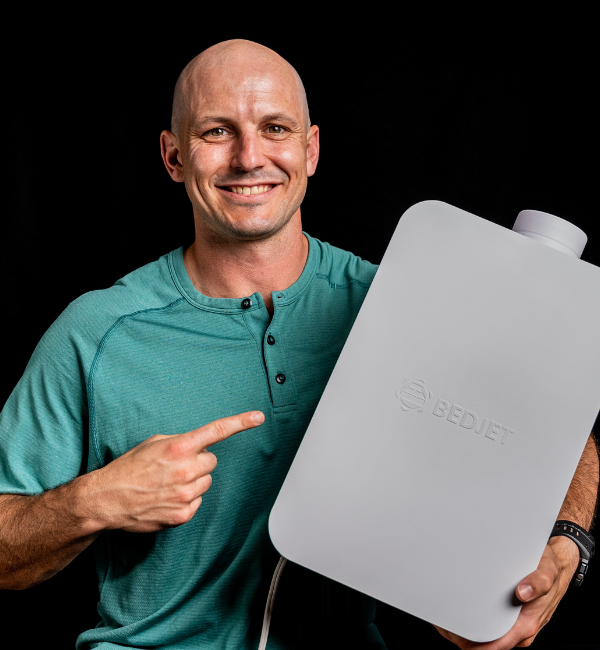
Sleep can drastically be improved by controlling the climate of the bedroom. There are many products on the market advertised to keep you warm or cool while you sleep. The Bedjet Climate System is a product that I recently tried. Watch my review and see if it’s the right for you! If you like what you see or you learned something, please give the video a like and subscribe so you can stay up to date all of of my latest content!
Need some more help with your sleep? Click the link below to set up and free assessment today!
Do You Need to Detox From Sugar?

“I feel like absolute garbage,” my personal training client exclaimed during a recent training session. “I thought I would feel better giving up sugar. She had mentioned she stopped adding sugar to her coffee, said to no sweets or candy, and threw out her fruit juice. This client was most likely going through the early stages of sugar withdrawals. Let’s do a deeper dive into sugar and talk about the sugar, the withdrawal symptoms, and how to cope.
The average American consumes 22–30 teaspoons (about 88–120 grams) of sugar each day. This is considerably more than the recommended maximum, which is 6 teaspoons (about 24 grams) for females and 9 teaspoons (about 36 grams) for males.
Therefore, if your diet is high in added sugar, reducing your added sugar intake may come with some unpleasant symptoms.
To better prepare you for a detox in sugar, it is important to know some possible side effects of detoxing from sugar. These symptoms include mental and physical:
Mental:
Depressed mood. Some people may feel down when they cut added sugar from their diet. This is partly due to a decrease in dopamine release.
Anxiety. Feelings of anxiousness may be accompanied by nervousness, restlessness, and irritability. You may feel like you have less patience than usual and are on edge.
Changes in sleep patterns. Some people experience changes in their sleep when detoxing from sugar. You might find it hard to fall asleep or stay asleep through the night.
Cognitive issues. You may find it difficult to concentrate when you quit sugar. This can cause you to forget things and make it hard to focus on tasks, such as work or school.
Cravings. Along with craving sugar, you may find yourself craving other foods, such as carbs like bread, pasta, and potato chips.
Physical:
Feeling Run Down
Headaches
light-headedness or dizziness
nausea
fatigue
One thing to keep in mind is that when you are coming off sugar, your caloric intake is going to drop as well. And depending on how much sugar you were eating, this may make up a significant amount of daily calories. Because of the large variance from person to person, I recommend working with a knowledgeable coach or professional to not only help mitigate withdrawal symptoms, but keep the client from spinning their wheels. In my time as a nutrition coach, I have seen many people get off sugar and not replace it with healthier options, leading them to under eat markedly. Could this be you?
Are you looking to kick the sugar train? I’m here to help! Click the link below to get started today!
Are You A Weekend Warrior?

Working out has obvious benefits of better strength, improvements in body composition, and decrease in stress, however there is one advantage that is often overlooked: General Physical Preparedness (GPP). GPP is an individuals ability to conform to the physical and mental tasks that life offers them on a daily basis. Requisites will vary in degree from individual to individual, but not kind. A 90 year old man needs to move for long distances, pick up objects, and sit down and stand up as for example. That is no different than an 18 year old college lacrosse player, however the intensity in which these two individuals perform these activities will vary.
When an individuals GPP is high, they are able to excel at what life throws at them, and most importantly for the aging athlete, with little risk of injury. When an individuals GPP is low, ordinary tasks and deviations from their normal daily routine are not easily dealt with and increase the individuals risk for injury.
When an aging athlete plays a sport on the weekend, (basketball, golf, flag football, etc.) I consider these athletes as weekend warriors. In order to stay safe and perform well on the weekends, it would serve these athlete to increase their GPP during the week. Here are 3 simple ways to increase GPP:
Add 1 Long Endurance Workout Per Week-Most aging athletes have fallen in love with HIIT (high intensity interval training) and for good reason. Few workouts possess the numerous benefits that HIIT training has. However, the benefits of long slow distance (LSD) training are also great. LSD increases capillary density, cardiac output, and strengthens the tissues that are needed to perform long efforts. My preference is to do LSD workouts outdoors. Long bike rides or hikes are my personal favorites.
Perform Multi-Joint Movements-Swinging a golf club or running across a soccer field are examples of total body movements. Performing curls in the squat rack is a single joint movement (and will get you stared at by any self respecting person). There is nothing wrong with single joint movements, but in order to train the joints of the body to work in concert like they do in your sport or activity, you must work multi-joint movements into your training. Examples are deadlifts, tosses, squats, and presses. Not only will this improve your GPP, it will cut your workout time down as well as you are hitting multiple body parts at once.
Perform Core Work In Every Workout-Dan John, one of my favorite strength and conditioning coaches of all time has a saying, “If it’s important do it every day. If it’s not, don’t do it at all.” I would consider core work important, so you should be doing it every day. Your core work should not be 100 sit-ups for time. I repeat, STOP DOING SIT-UPS FOR YOUR CORE WORK. There are a million different exercises and sit-ups are but one of them. Work in rotational exercises, anti-rotational exercises, tosses, and plank variations on a cyclical basis and you will see your core strength improve and your hip, lower back, and knee pain disappear.
Want to learn more about being a weekend warrior? Click the link below to listen to Scott Hagnas and I’s most recent podcast. We do a deep dive on prepping for ski/snow board season!
3 reasons personal training is right for you…

At home personal training is one of the best ways to reach your fitness goals, but there are also some added benefits that you might not realize you are receiving. Here are 3 benefits to hiring a personal training that you probably never thought of:
Time saved-The average person travels 10 minutes (4 miles) to get to the gym each day. Then you have to include the travel back home. In total you are spending 20 minutes on travel daily and 80 minutes a week if you are training four days per week. In fact, the longer you have to travel to get to the gym, the less likely you are to go the gym. When working with a personal trainer in your home, you get that time back. How much is an 1+ hour a week worth to you?
Better Strength-People who get direct supervision during resistance training have greater gains for both lower- and upper-body muscles, primarily due to the higher training intensity that comes with working out with a personal trainer. In addition, there is a lower propensity of injury when using a personal training versus self-training.
Improved Accountability-The majority of health clubs and gyms lose 50% of their new members within the first six months. When working with a personal trainer, this number drops off drastically. Why? When I show up at your house and knock on your door, you are not skipping the workout!
Ready to start a training program of your own? I’m here to help! Click the link below to set up a free assessment today!
From Struggling with 50 Yards to Crushing 1 Mile in Open Water...

Circa 2009 at the Westchester Toughman Half Ironman. 14th place Overall and 1st in Age Group
The other day, I met a new neighbor who had just moved in. After asking me what I do for a living, he replied, “How do I lose this 15 lbs.?” I gave my usual response, “Stop eating sugar.” He answered, “I don’t eat sugar, but I drink a lot of beer.” It got me thinking, why do we put an asterisk next to our goals? I want to lose weight but I don’t want to eat healthy. I want to put on more muscle, but I don’t want to lift heavy weights. I want a better job, but I don’t want to leave the one I have. Typically, the reason you aren’t where you want to be is because of the condition you have chosen to live by and hold onto.
If you think and act like your old self, you are doomed to stay your old self. The actions you consider unthinkable to do now will be normal for the person you will be. I use myself as an example. When I was 23 years old, I decided I wanted to train for an Ironman after watching the world championships on NBC. I was a newbie to triathlon so I went to Borders books (yes this is dated) and I grabbed a book called Triathlon Training for Beginners. I read the book cover to cover and started to follow the training program in the back of the book. The first swim workout when training for an Olympic distance triathlon read as follows:
Swim 200m easy warm-up
12x50m @ tough pace
Swim 200m Easy Cool-Down
Just to give you an idea, though I had a background in swimming for my town team in the summer, I hadn’t ever swam more than 100m in a row at any given time. I knew this workout would be rough. And I was right. I could barely make it through the warm-up, and by the time I got to the actually workout, I was already gasping for air with a belly full of pool water. After the workout, I skipped forward a few pages and looked at what I would be doing 12 weeks in the future:
2,000m time trial
I was shocked. I couldn’t fathom swimming that far continuously in a pool. But I showed up for the next workout and continued to struggle. And struggled more. And struggled more. After a few weeks, the warm-up became easy. I threw in a few swim lessons here and there my confidence started to grow. After 12 weeks, I had reached the time trial workout. Man, was it brutal, especially the first 500m. But once I found my rhythm, the laps just melted away. At the end of the 2000m, I was spent but felt awesome. I had done it, and it felt good. It felt normal. I had grown so much in the last 12 weeks, but had I allowed my fear of failure or pain or the challenge get the best of me, I would have still been struggling with the 50m intro workout.
What I am trying to get at is that if you are looking to achieve one of your fitness and wellness goals, prepare to struggle. That’s completely normal. What it really means is that you are challenging yourself. As I showed in my own story, the person you are to become will look at the person you used to be with gratitude for putting yourself into a vulnerable position and taking that risk.
If you are ready to become comfortable with the uncomfortable, but a free assessment today. I offer nutrition coaching, individualized training programs, and personal training. Let’s get started today!